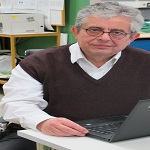
George Kordas
Peter the Great St. Petersburg Polytechnic University · Russia
Editorial leadership for Journal of In-vitro In-vivo In-silico Journal
Biography
George Kordas is affiliated with Peter the Great St. Petersburg Polytechnic University, Russia, where his research focuses on materials science, sol-gel processing, and advanced coating technologies. Throughout his career, he has made significant contributions to glass science, superconductors, and nanostructured materials, serving on international organizing committees and as a visiting professor at institutions including the University of São Carlos, Brazil, and Georg Simon Ohm University of Applied Sciences, Germany. His most-cited publication, "Corrosion Barrier Coatings: Progress and Perspectives of the Chemical Route" (2022), has been cited 25 times and reflects his ongoing work in protective coating development. He has received numerous honors, including the Award for Scientific Excellence from the National Center for Scientific Research (2012) and the Honorary Award for Outstanding Achievements in Innovation (2015), and has served as a member of the European Research Council's Starting Grant ERC LS7 Panel.
Considering IIIJ for your work?
This journal is guided by George Kordas (Peter the Great St. Petersburg Polytechnic University) and a peer-review board of practising researchers. Open access, author-retained copyright (CC BY), and a clear editorial process.