Editorial Board
Editorial Board of the Journal of Sports and Exercise Medicine
The editors responsible for what this journal publishes, with the institution each works at and the subject each brings to it.
Editor-in-Chief
Final responsibility for what the journal publishes rests with the Editor-in-Chief.
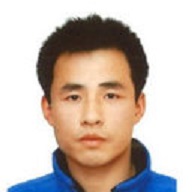
Editor-in-Chief
Liye Zou
Professor, Shenzhen University, China
Exercise medicine; mind–body exercise intervention; physical activity, cognition and mental health
Editorial board
Board members advise on scope and standards and handle manuscripts within their own fields. Between them they cover the journal’s five core domains: clinical sports medicine and traumatology, exercise physiology, rehabilitation and physiotherapy, biomechanics and motor control, and exercise medicine. Each entry shows the institution recorded on that member’s own public ORCID record, or, where the registry records none, the affiliation printed on their recent published work; the iD on each entry opens the record.
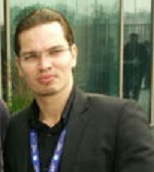
Editorial Board
Kamran Ali
Associate Professor, Department of Physiotherapy, School of Allied Health Sciences, Galgotias University, India
Sports physiotherapy and rehabilitation; plyometric training; strength and conditioning
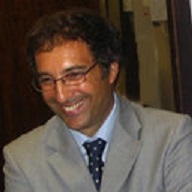
Editorial Board
Angelo Cataldo
Professor in charge, Università degli Studi di Palermo, Italy
Exercise physiology; cardiac autonomic response; exercise testing and sport training
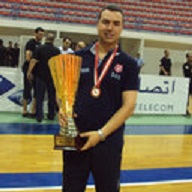
Editorial Board
Mohamed Souhaiel Chelly
Professor, Higher Institute of Sport and Physical Education of Ksar Saïd, University of La Manouba, Tunisia
Strength and conditioning; plyometric training; sprint, jump and change-of-direction performance

Editorial Board
Guy Cheron
Laboratory of Neurophysiology and Movement Biomechanics, Université Libre de Bruxelles, Belgium
Motor control and movement biomechanics; electroencephalography and electromyography

Editorial Board
Gerasimos Grivas
Lecturer, Hellenic Naval Academy, Greece
Endurance performance physiology; running economy; strength training in athletes
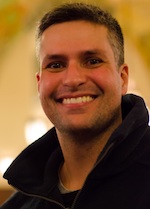
Editorial Board
Felipe Gomes Ferreira Padilha
Universidade Federal Fluminense, Brazil
Comparative and equine exercise physiology; skeletal muscle genetics
Editorial Board
Antonios Papasotiriou
Greece
Sports traumatology; orthopedic surgery; clinical sports medicine
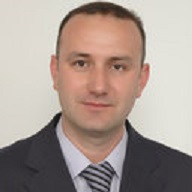
Editorial Board
Ratko Pavlović
Bosnia and Herzegovina
Sport science; physical education; kinesiology
Editorial Board
Nejka Potočnik
Assistant Professor, Faculty of Medicine, University of Ljubljana, Slovenia
Exercise physiology; cardiac autonomic recovery; microvascular and respiratory responses to exercise

Editorial Board
Shaoqi Tian
Attending physician, Orthopedics (Joint Surgery), The Affiliated Hospital of Qingdao University, China
Orthopedic and clinical sports medicine; joint surgery
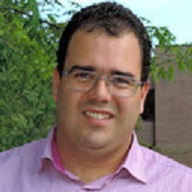
Editorial Board
Rodolfo Paula Vieira
UniEVANGÉLICA — Centro Universitário de Anápolis, Brazil
Exercise immunology; exercise in chronic respiratory disease; human movement and rehabilitation
How decisions are made
Screening, review, decision
All submissions undergo initial editorial screening. Manuscripts that meet the journal's scope and minimum requirements proceed to independent peer review.
Single-blind by default; double-blind review is available on request.
Manuscripts that proceed to external peer review are normally evaluated by at least two independent subject-matter experts.
Editorial decisions are based on scope, scientific quality, methodological rigor, ethical compliance, reporting quality, and relevance to the journal.
Who may not decide
Editors and reviewers must disclose conflicts of interest and recuse themselves when appropriate.
An editor takes no part in assessing a manuscript they have authored, or one where an institutional, financial or recent collaborative interest would bear on the decision. The manuscript is handled by another editor instead.
Editorial decisions are independent of any fee, membership, service or role. An article processing charge falls due only after acceptance and has no bearing on how a manuscript is assessed.
When double-blind review is requested, editors must ensure that author-identifying information is not shared with reviewers.
Editorial policies in full · Reviewer guidelines · Guidelines for editors
What editors look for
Beyond scope and method, editorial assessment in this field attends to the things that make a result interpretable and the participants safe.
- The participants, reported as they were. Training status, age and sex distribution, competitive level and injury history, so a finding can be placed in the population it came from.
- Ethics, consent and athlete privacy. Committee approval and documented consent, and written consent for identifiable case material — a squad, a position and an injury can identify a person without a name.
- Claims that match the design. An injury-prevention, rehabilitation, return-to-play or performance conclusion has to be supported by what was actually measured.
- Statistical and reporting integrity. Outcomes defined in advance, the analysis stated, and the reporting standard for the design followed.
- Commercial interest, declared. Research on supplements, devices, footwear and wearables is welcome; studies funded by a manufacturer must demonstrate independent rights of data analysis and interpretation.
Joining the board, or reviewing
The journal is open to researchers and clinicians who publish in its core domains and can take on handling or review work.
Write to the editorial office with a short statement of your subject area and a link to your publication record or ORCID iD. Reviewers are matched to manuscripts by subject, and a review invitation carries the manuscript’s abstract so you can decline on scope or on a competing interest before seeing the full text.
Across the journal
Journal of Sports and Exercise Medicine (JSEM) · ISSN 2694-2283 · Crossref DOI prefix 10.14302 · publishing since 2018 · published open access by Open Access Pub under CC BY 4.0, with copyright retained by authors. Editorial decisions are independent of any fee, service, membership or role.